Peer Review Process
ORTHOTOMEO: Jurnal Penelitian Ilmiah menerapkan setiap naskah yang diterima akan melalui proses review oleh Editor dan reviewer, dengan menggunakan metode Double Blind Peer-Review, dimana reviewer tidak mengetahui identitas penulis, dan penulis tidak mengetahui identitas reviewer.
ORTHOTOMEO: Jurnal Penelitian Ilmiah menerapkan kebijakan Double Blind Peer-Review, setiap naskah yang diterima akan dikirimkan kepada Reviewer yang terdaftar di ORTHOTOMEO: Jurnal Penelitian Ilmiah. Proses review berlangsung maksimal 30 (tiga puluh) hari dengan alokasi waktu yang diberikan kepada masing-masing reviewer untuk menyelesaikan proses review-nya maksimal sepuluh (10) hari kerja. Apabila mitra bestari yang ditunjuk sebelumnya tidak dapat menyelesaikan pekerjaan review-nya dalam batas waktu yang ditentukan maka Ketua Dewan Redaksi akan menunjuk Reviewer pengganti untuk melakukan review naskah.
Dalam proses review, reviewer memberikan pertimbangan terkait kesesuaian antara judul, abstrak, pendahuluan, pembahasan (hasil) dan simpulan. Selain itu reviewer juga memberikan pertimbangan terkait kebaruan, dampak ilmiah dan referensi yang digunakan.
Proses Peninjauan:
- Penulis mengirimkan naskah
- Evaluasi Editor [beberapa naskah ditolak atau dikembalikan sebelum proses review]
- Proses peer review double-blind
- Keputusan Editor (Menerima Pengajuan, Revisi Diperlukan, Kirim Ulang Untuk Review, Menolak Pengajuan)
- Konfirmasi kepada penulis
Keputusan akhir mengenai penerimaan artikel akan dibuat oleh Editor berdasarkan komentar para pengulas. Publikasi artikel yang diterima termasuk urutan artikel yang diterbitkan akan dibuat oleh Pemimpin Redaksi dengan mempertimbangkan urutan tanggal penerimaan dan distribusi geografis penulis.
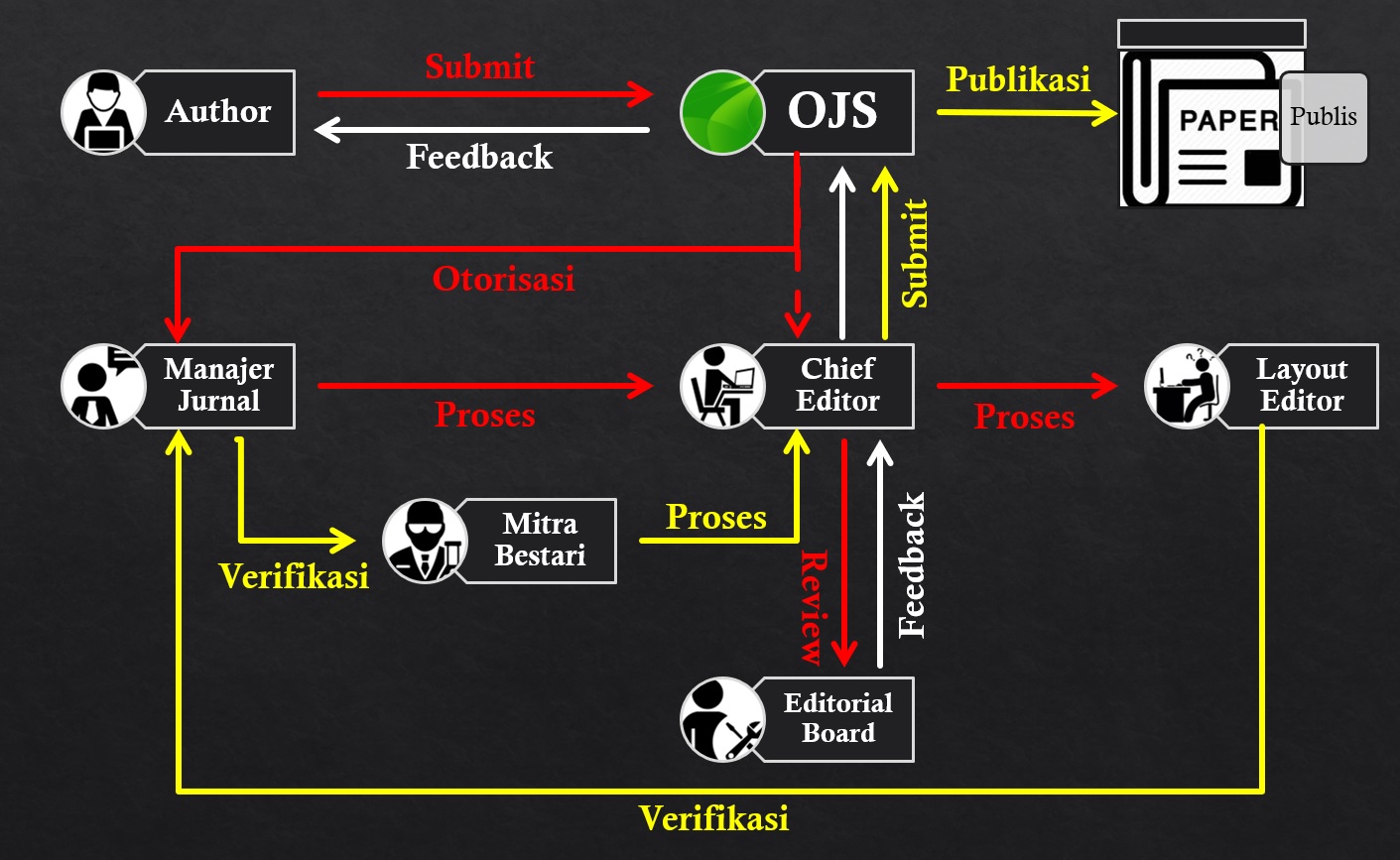
- Penyerahan: Penulis menyerahkan naskah kepada editor.
- Pra-pemeriksaan: Editor meninjau naskah untuk mengetahui kelengkapan dan kepatuhannya terhadap pedoman jurnal. Jika naskah tidak lengkap atau tidak memenuhi pedoman, editor dapat mengembalikannya kepada penulis untuk direvisi.
- Tinjauan sejawat: Editor mengirimkan naskah ke dua atau lebih peninjau untuk mendapatkan umpan balik. Peninjau mengevaluasi naskah berdasarkan manfaat ilmiah, orisinalitas, dan kejelasannya.
- Keputusan editor: Berdasarkan masukan dari pengulas, editor membuat keputusan untuk menerima, menolak, atau merevisi naskah.
- Produksi: Jika naskah diterima, naskah tersebut dikirim ke tim produksi untuk diformat dan ditata.
- Publikasi: Naskah diterbitkan dalam jurnal.
==================================================================
(English Version)
Peer-Review Process and Manuscript Rejection Criteria
1. Submission and Pre-Screening (Processing Time: 2 Weeks)
Authors submit their manuscripts to the editor through the OJS electronic system. During this period, the editor conducts an initial screening to verify that the manuscript fits the journal’s focus and scope, and checks for completeness, adherence to author guidelines, formatting, template compliance, similarity levels, and ethical standards.
Rejection criteria at this stage:
-
The manuscript is not relevant to the journal’s scope.
-
The manuscript is opinion-based without sufficient data or methodological support.
-
The manuscript violates publication ethics, such as plagiarism or duplicate submission.
-
The manuscript does not follow the required format even after technical revision opportunities.
-
The manuscript contains unverifiable data or unsupported claims.
2. Peer Review (Processing Time: 30 Days, Maximum 3 Months Including Revisions)
Manuscripts that pass the initial checks are sent to at least two anonymous reviewers for evaluation. Reviewers assess the scientific merit, originality, methodology, clarity of writing, and relevance of the research.
Rejection criteria at this stage:
-
Lack of significant scientific contribution or clear novelty.
-
Weak or invalid research design and methodology.
-
Findings, analyses, or conclusions not supported by adequate evidence.
-
Poor organization or unclear writing that affects comprehension.
-
Ethical breaches, such as data manipulation or copyright infringement.
3. Editorial Decision (Processing Time: 1 Week After Peer Review)
The editor reviews the feedback from peer reviewers to make a final decision: accept, request revisions (minor or major), or reject.
Rejection criteria at this stage:
-
The author fails to revise the manuscript according to reviewer feedback within the specified timeframe.
-
Revisions do not address the fundamental weaknesses identified during peer review.
-
The manuscript still does not meet the journal’s quality standards, even after revision.
4. Production (Processing Time: 1 Week)
Accepted manuscripts proceed to the production stage for final formatting and layout, including page numbering, table of contents preparation, and refinement of language, tables, and figures.
5. Publication
Manuscripts that have completed the production stage are published electronically according to the journal’s scheduled issues in April, August, and December each year.